🚀 New STEMonstration: Digestion JUST released!
Science Without Borders: The International Partnership Behind the New STEMonstration
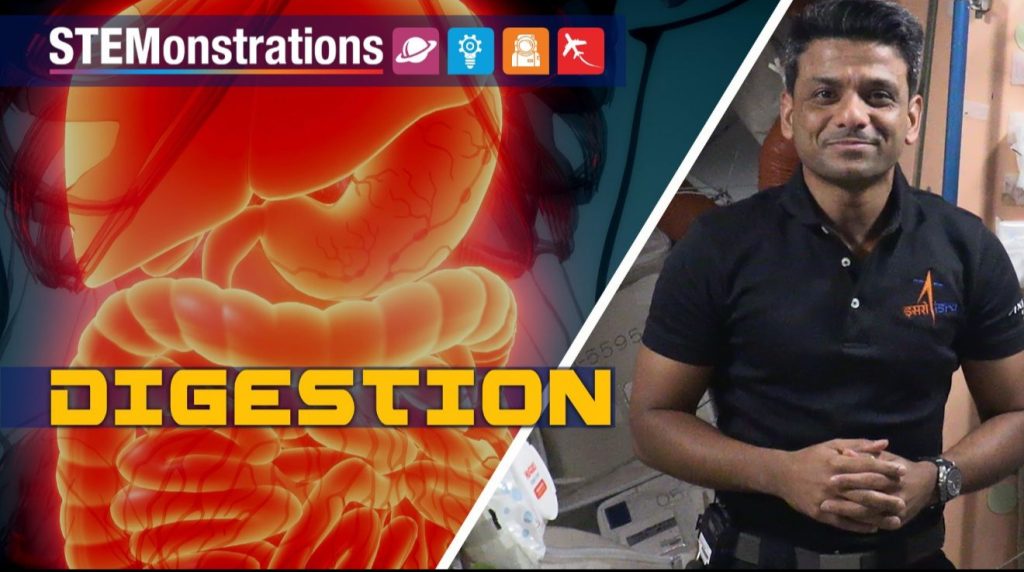
After MONTHS of planning, I’m excited to share the latest episode in the STEMonstration series—featuring Indian Space Research Organisation (ISRO) astronaut Shubhanshu Shukla, who recently flew to the International Space Station as part of Axiom Mission 4 (Ax-4).
Over the moon to see this through— from concept to script development, on orbit filming and finally public release in collaboration with our ISRO counterparts—helping extend access to even more students around the world. 🌍🇮🇳 🇺🇸
Lessons Learned
Working across international and interdisciplinary teams on the ground often mirrors what’s happening 250 miles above us on the International Space Station. Different countries, agencies, and sectors bringing unique strengths to one shared mission. A few lessons that consistently show up in both places:
1. A shared mission keeps everyone moving in the same direction.
On the ground, teams may span agencies, countries, and organizations—but alignment around the objective keeps the work focused. The same is true on orbit. Astronauts from multiple nations live and work together because the mission comes first. The goal becomes the common language.
2. Different disciplines create stronger solutions.
Our teams include educators, engineers, scientists, communicators, astronauts and project managers—each approaching the same challenge from a different angle. The ISS operates the same way. Crew members arrive with different training and national backgrounds, and that overlap strengthens the mission. With a background in geochemistry astrobiology research and secondary education, I have the added advantage of thinking as both a scientist and an educator—helping bridge technical work with learning experiences for students.
3. International partnerships expand the way we think.
Similarly, when teams cross borders, they bring with them different assumptions, problem-solving styles, and cultural perspectives. That diversity strengthens the work. The ISS is built on that principle—multiple countries contributing different capabilities and viewpoints to achieve something no single nation could accomplish alone. Cross-border collaboration brings vastly different perspectives—and I love rising to that challenge. Even small decisions require global awareness. For example, when designing student lessons, we have to consider what supplies are accessible in different parts of the world. Using food as materials might seem simple in the U.S., but in places where food access is limited, that approach can be inappropriate.
4. Structure makes global collaboration possible.
Behind every successful international project is an enormous amount of coordination—timelines, protocols, communication systems, and clearly defined roles. The same is true for space operations. The ISS only works because of carefully structured collaboration between space agencies around the world. Managing a project like this requires maximizing every opportunity to systematize. As project manager, I used strong systems to track feedback, integrate changes, and coordinate input from teams across organizations and time zones. Staying organized ensured nothing slipped through the cracks.
5. The future of exploration is public-private partnership.
Axiom-4 highlighted another dimension of modern collaboration: governments working alongside private industry. Just as our work increasingly spans public institutions and commercial partners, the future of spaceflight is being built through that same kind of partnership—where innovation accelerates when sectors work together.
Different teams. Different countries. Different perspectives.
But the same principle holds true—big missions succeed when people bring their expertise together around a shared goal. 🚀This episode explores how digestion works in space (and on Earth 🌎)—from the muscle movement known as peristalsis to the roles of hydration, diet, and the gut microbiome in supporting astronaut health on long-duration missions to the Moon, Mars, and beyond.
🎥 Watch the episode and explore the hands-on classroom activity and career connections here: https://lnkd.in/gWPQi9cZ